CTRL+GEN: The Rise of Undetectable AI Images
by AKM
Posted on March 31, 2025 at 10:32 AM
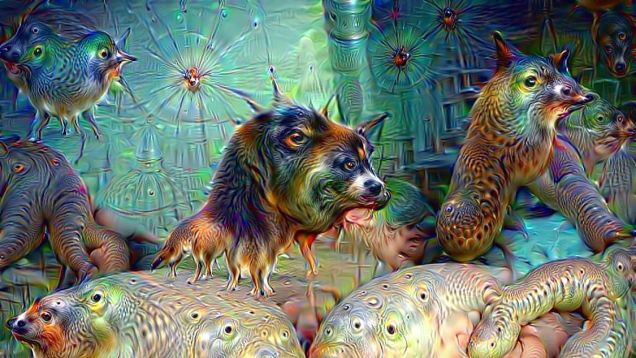
From Deep Dream to Base Reality
It wasn't too long ago that our AI generated images looked like the above. This image was created using Deep Dream, a computer vision program created by Google. Then we had iterations of DALL-E that converted text to generated images, the initial release was in January 5, 2021. It had its batch of issues that helped identify what was fake or real. Anything having to do with quantity such as number of fingers, strains of hair, noodles, would be morphed into chaos. It was the equivalence of the hallucination problem seen in text-based LLMs.
Four years later, here we are and the images have only gotten better. OpenAI in particular just released updates to their 4o model, and it can seamlessly edit aspects of photo using text. It has even improved on one particular area of AI generated images involving displaying text. Only a few months ago, each time you generated images that had signs, billboards, paper, any medium that could have text on it would return a stream of non-text artifacts. It was used to easily identify fake images, but no longer is that method viable. This opens a can of worms for traditional software designed to accept photos as a form of verification. Take for instance this example of committing insurance fraud:
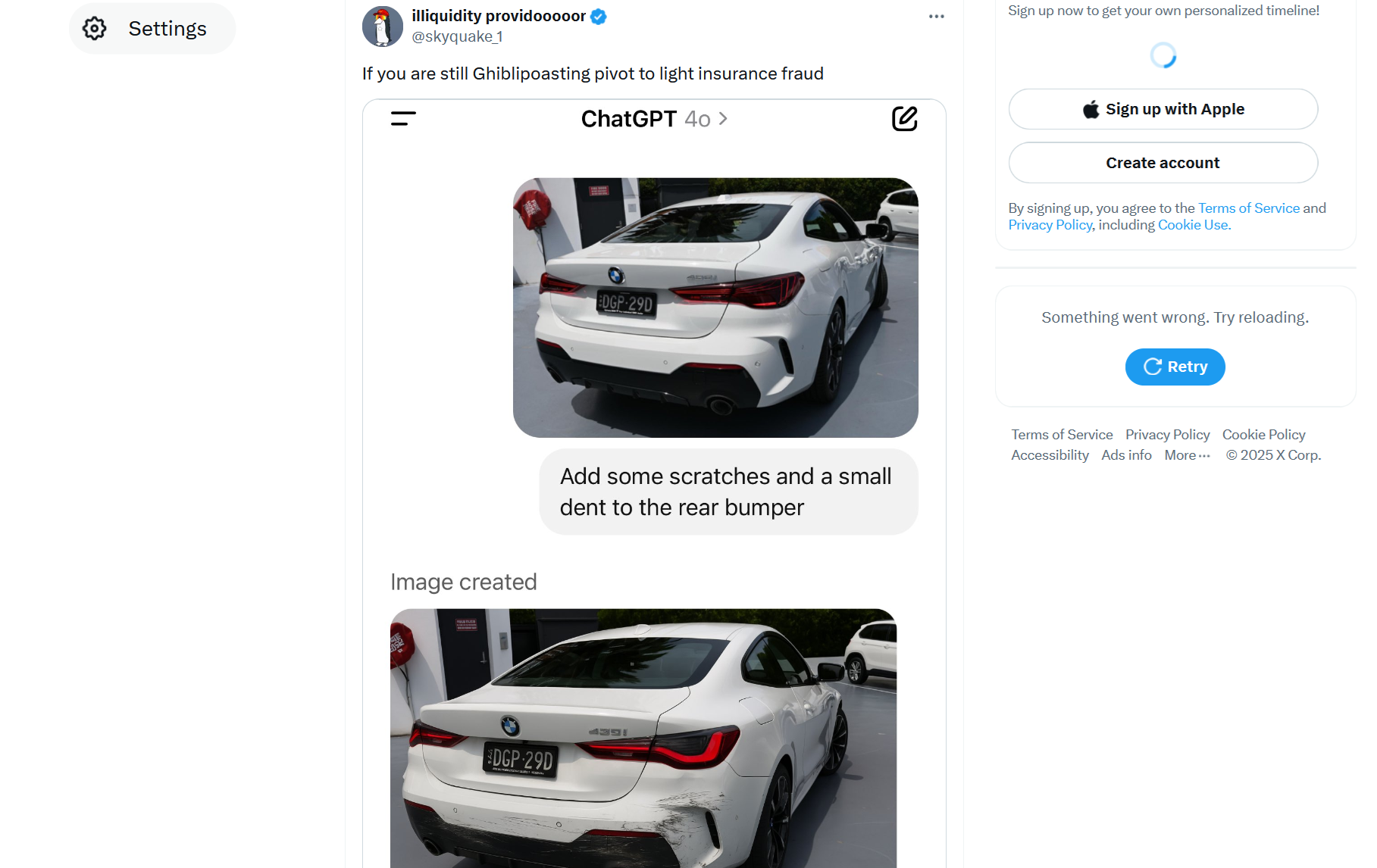 https://x.com/skyquake_1/status/1906153724294422636
Clearly satire, however it brings up an important revelation that traditional systems that process images to verify claims such as for insurance cannot be trusted. There are many derivatives of systems like this, like the system you use at work to verify receipts can now be doctored. ID verification systems like those seen in Facebook or KYC systems like seen in Coinbase are all at risk. While true that cloud based AI systems have certain guardrails in place to help prevent the creation of such images, they are still in a phase that allows for easy bypassing. So is all hope lost?
Human and visual cues to Machine embedded ones
Counting fingers is no longer reliable. Neither is looking for garbled text. There are still visual cues you can look for, for example, if you look careful enough in the background for things that are quantifiable such as wiring, lamp poles, etc. things that you can count, it still sometimes gets it wrong.
Sometimes the image data the model is trained on isn't sufficient either for things that are quantifiable. For example, right now even with the upgrades from OpenAI on 4o, you still can't generate images of classic clock faces in specific positions because most watch photos are placed in a particular time to look more visually pleasing, and it's part of the same data that OpenAI trains on. Take the conversation below as an example:
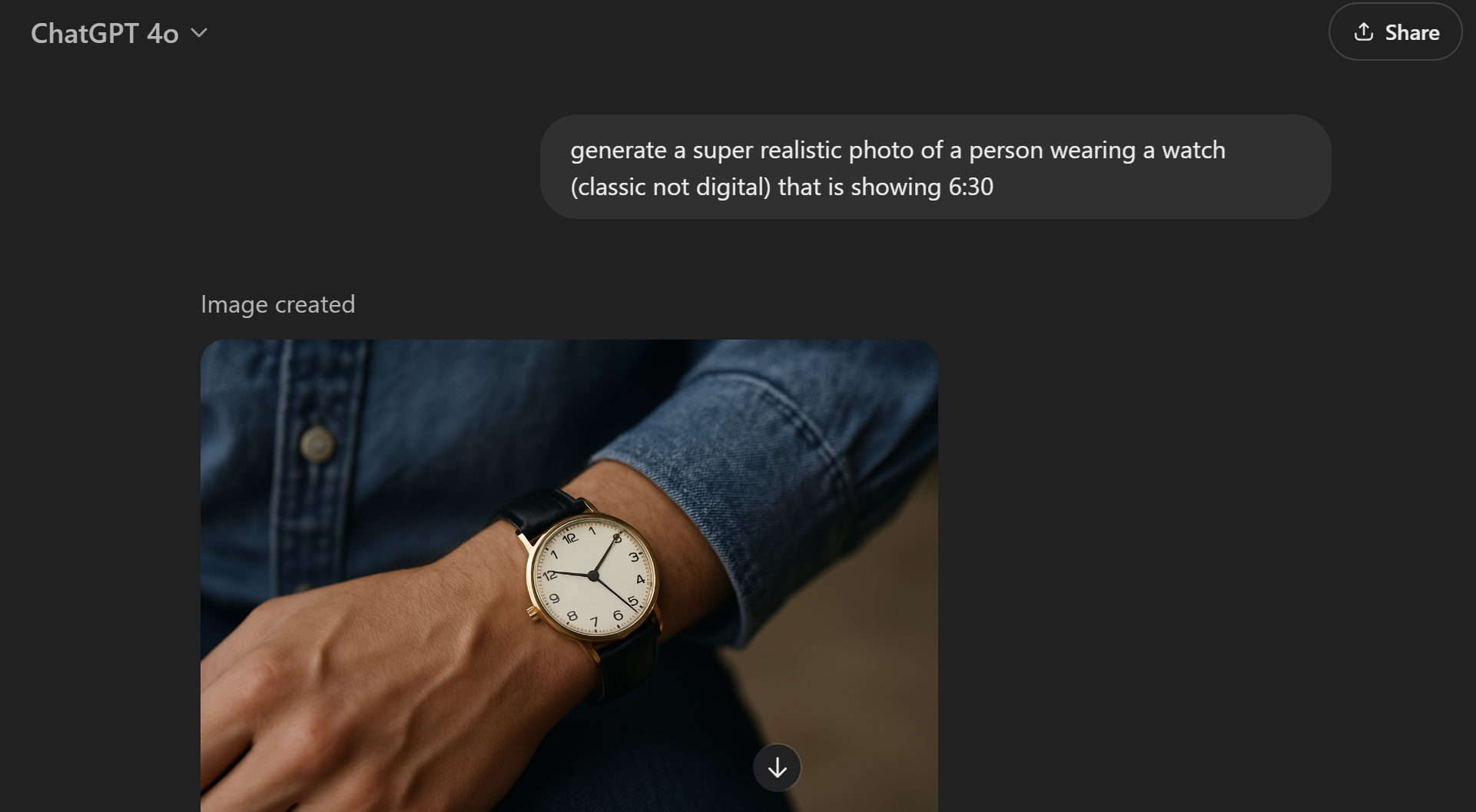 https://chatgpt.com/share/67eb0efb-4520-800e-ac82-07bd62c5e1c0
In short, although counting fingers is patched (mostly), there are still many artifacts that involve quantity that gives it away.
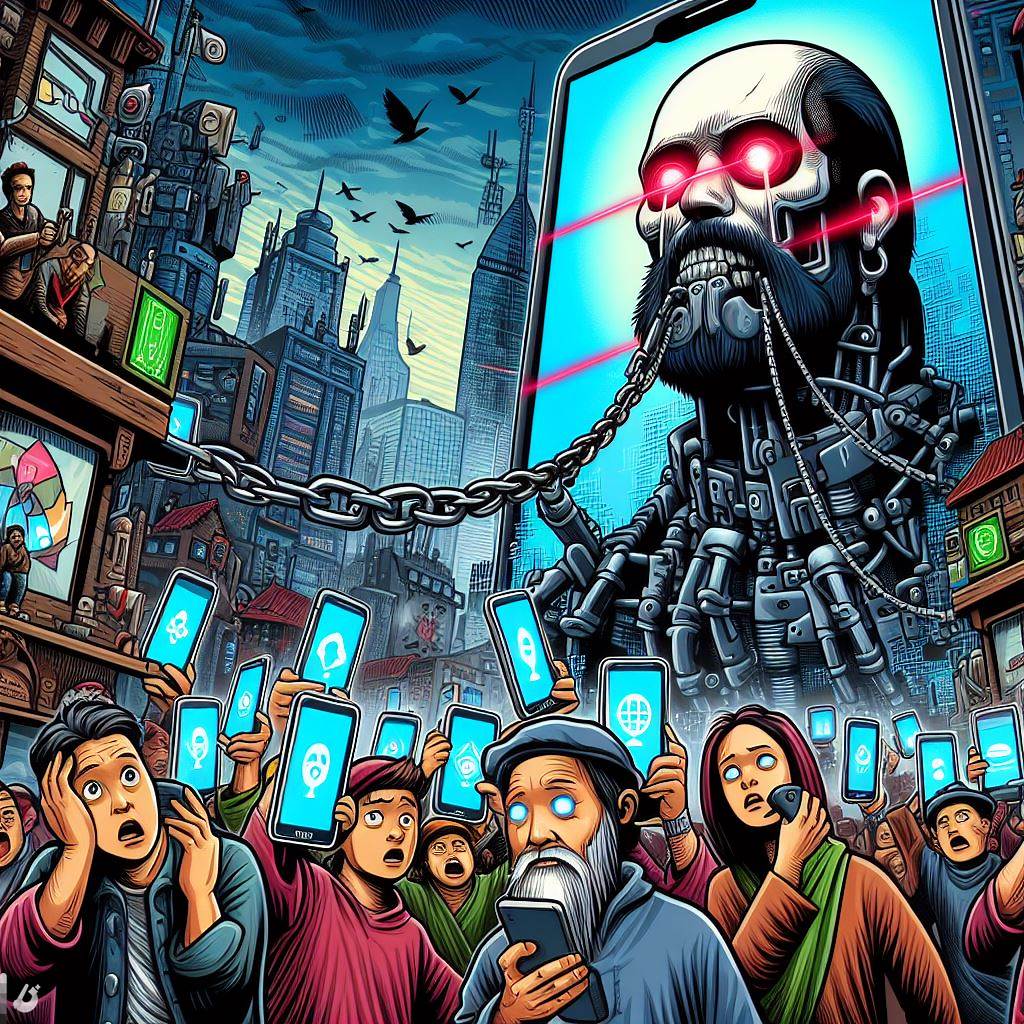
In the past companies like Microsoft and Google have tried embedding watermarks in the images directly. Take this image above, if you look carefully in the corner you're able to see a small icon that represents this image was created using Bing image generator. Bing doesn't seem to create this watermark anymore. For obvious reasons, this watermark is very easy to bypass by simply cropping the photo.
How about metadata embedded in images? Whenever you take a photo using a professional camera (or the one in your phone for that matter) it includes bits of information stored in the metadata fields of the image. Not all image formats support storing metadata. We have a service located at exif.app that helps you inspect such metadata. Things like GPS coordinates for where the image was taken, what type of camera was used to take the photo, etc. are all sometimes stored inside the image file headers.

The image above was created using Google's Gemini, Imagen 3 model. As you can see it has no watermarks but still easy to identify that it's not a real image visually. If we take this image and upload it to exif.app or similar tool for inspecting EXIF headers, we can see that it was created using a tool called "Picasa" which is a tool originally created by Lifescape but now owned by Google. Most likely not intentional but it gives away images created by Picasa and more importantly, Imagen 3.
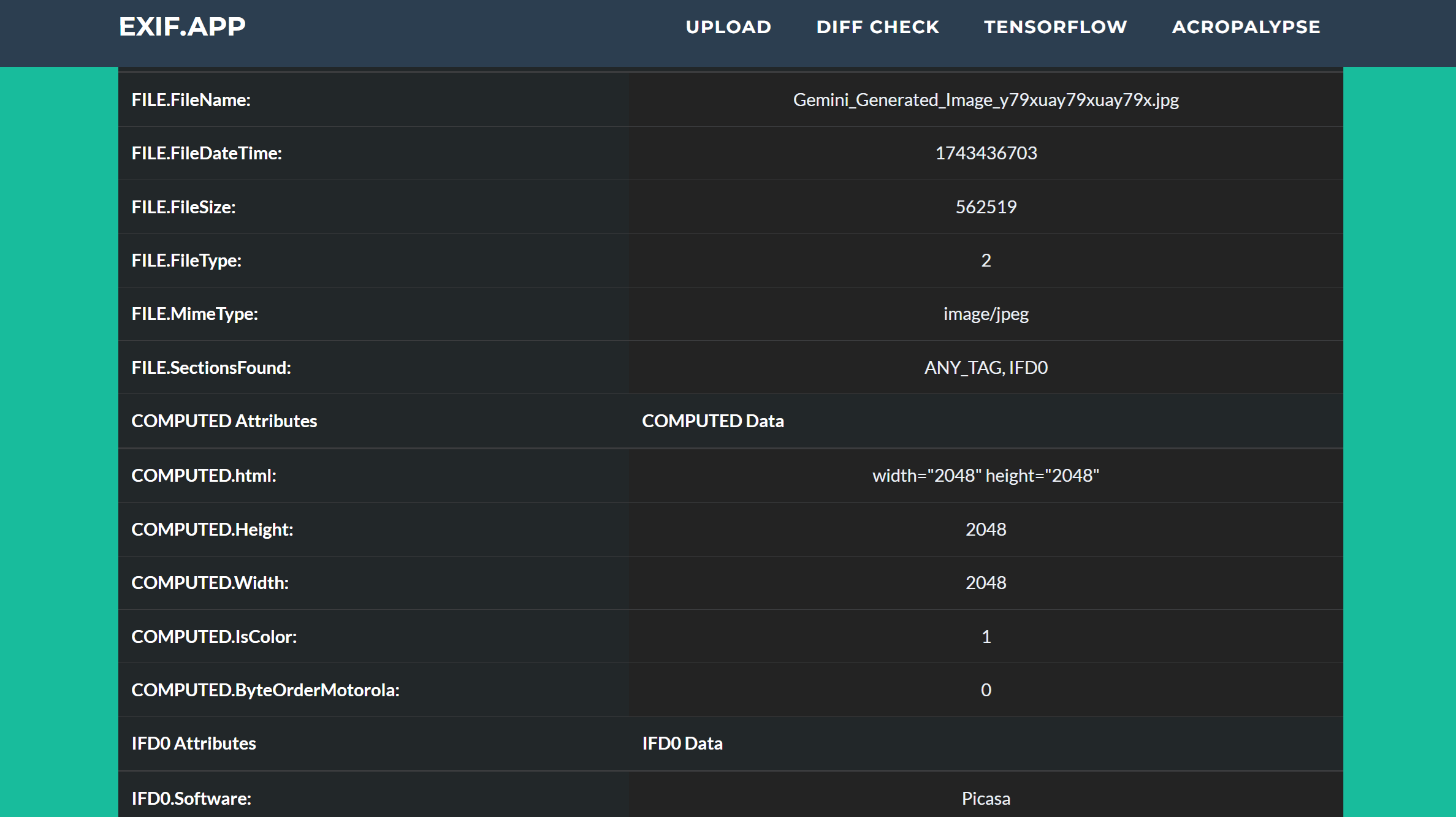
This still isn't reliable. The issue with EXIF metadata is that it can be stripped or manipulated. Most sites that allow image upload will erase this metadata (and collect it for personal gain). If you see images on sites like X/Twitter, Meta/Facebook, etc. they will not contain this data for you to take advantage of. If you own your own image upload system, you could in theory look for this metadata and choose to classify the file yourself, but it's still not reliable. What if a user used Picasa to edit the photo and it just so happens that Imagen 3 also uses it to do some final editing.
Locality-sensitive hash tables
The burden of the system I'm about to describe falls on cloud based AI generating systems to create. LSH or Locality-sensitive-hashing is a way to group similar inputs in "buckets". Think of traditional hashing but with collisions maximized. What are collisions? When data is hashed you are given a checksum, a long string of hexadecimal. It is assumed in most secure hash functions that a unique input will always result in a unique checksum. Checksums can't be reversed back into the input. The representation allows you to basically have an identifier that can be used to reference the original file. Collisions are when this statement holds untrue, when two inputs can give you the same checksum identifier.
For this hypothetical system, we want to maximize collisions. We want many inputs to result in the same hash. What we want is similarities in photos all resulting in the same identifier. For example, you have image_1.jpg that has the checksum 0xabcdeadbeef, then you crop this photo, call it image_2.jpg, and when you run the LSH algorithm against it, you still get the same checksum 0xabcdeadbeef. Services like TinEye use similar technology to help make reverse image searching possible, where photos that appear similar but vary in aspects such as photo resolution result in the same set of identifiers.
Conceptually, what is needed from cloud based AI companies is an open API endpoint that allows querying partial checksums that employs both LSH and K-anonymity to retain privacy, and the ability to see if an image was generated using their services. Each time a user queries their system for an image to be generated, that image needs to have sets of identifiers collected from it and stored so that no matter how the image is used, various other services can query this open endpoint for if it was created using them.
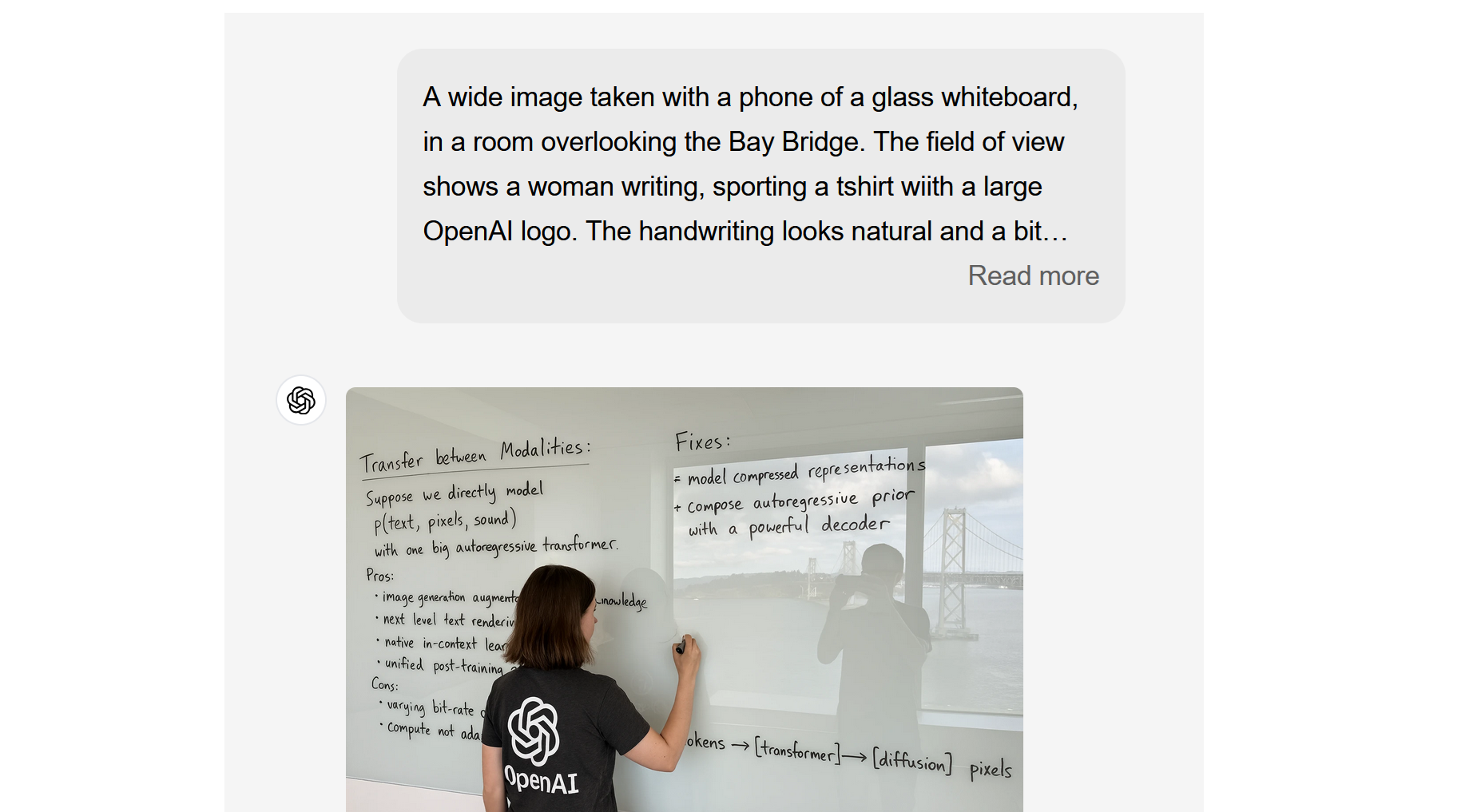 https://openai.com/index/introducing-4o-image-generation/
Cues for the glass eye
This image is from OpenAI's new 4o upgrade. Notice the text is all correct. In the reflection we have another person taking the photo, behind which is a window of a bridge. The attention to detail here is impressive and is a result of good prompting, but from an outsider looking in, knowing that this image was generated is very difficult. If we look very carefully at the bridge there are some AI artifacts that give it away as being fake. This is a good example of things that contain quantity and the image model getting it wrong.
Your average person unfortunately isn't going to look this deep when encountering such content on social media. The attention span will vary, but most people will look at this for a few seconds and assume it's real unless an intervention system tells them otherwise.
So is all hope lost? There is still room for creating signatures at the file level (not metadata or file headers) in identifying if this image was generated or not. Google's DeepMind team created a watermarking system called SynthID that Imagen 3 and other models currently use. It creates a signature at the pixel level in such a way that is invisible to the human eye but not to our machine friends. This system isn't just for images, it's also designed for AI-generated text, music, images and videos.
While true that if people start using their own personalized agents, these watermarks will be non-existent. However, to create high quality images, as of the time of this writing still requires you to acquire high-end hardware or wait a long time to generate images. There is an incentive for those impatient or without high-end hardware to still use cloud based AI systems that do have the capability to generate sets of identifiers to help with classifying images as generated or not. Whether the described systems are used, the burden falls on cloud AI providers to implement and ensure a safer transition into a world of accelerated disinformation.
InfoSec Related